
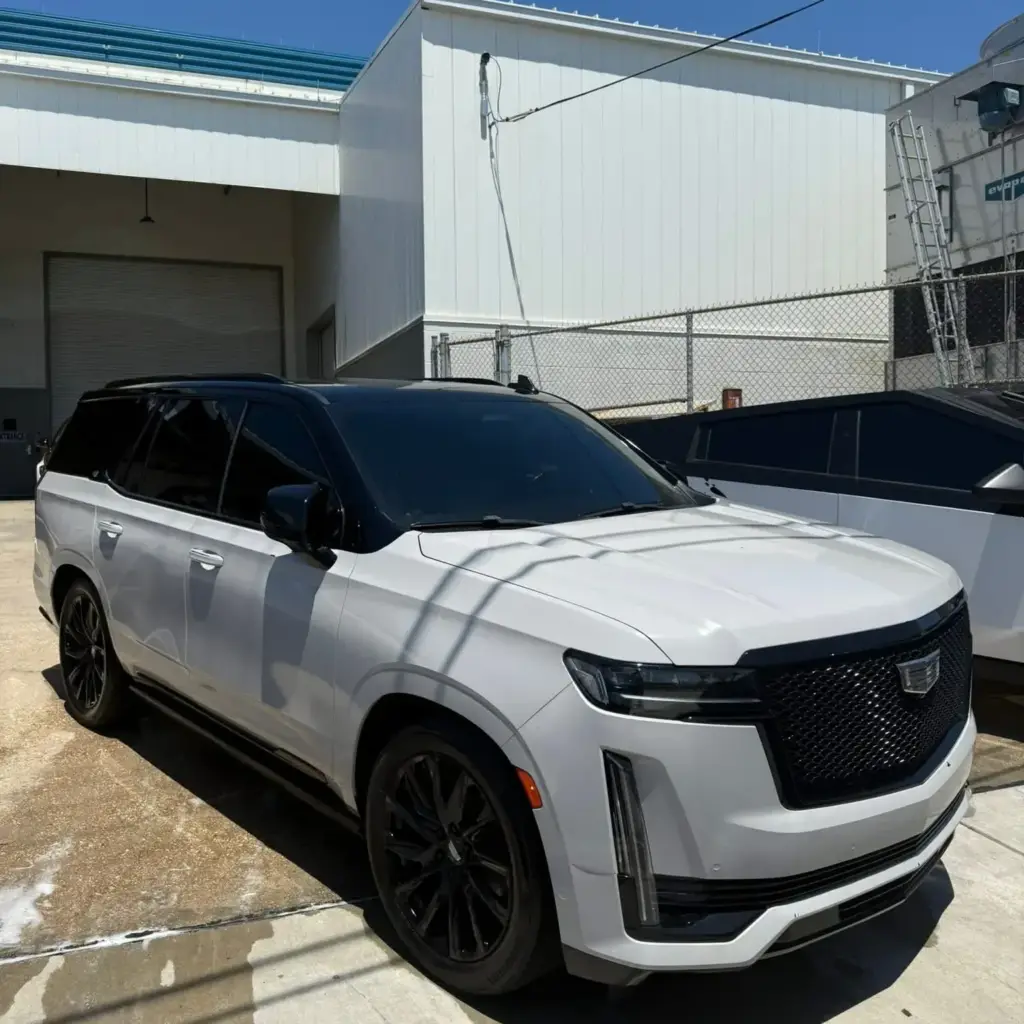
Window tinting cost in Houma, LA depends on the film, the vehicle, and the work needed before installation. Drivers across Terrebonne Parish often start with one price question and end up comparing very different quotes. Southside Tint & Detail breaks the numbers down here so car owners can budget with confidence. The shop’s automotive window tinting in Houma page lists its current packages and film lines.
How Much Does Window Tinting Cost in Houma, LA in 2026?
Window tint in Houma is priced by quote, because the final number depends on the exact vehicle, film, and coverage. No verified price list covers every car and truck in Terrebonne Parish. Any single price found online is a rough guide at best.
Published 2026 price guides from shops in other U.S. markets show full-vehicle tint from about $100 to $800. Dyed film sits at the low end, carbon in the middle, and ceramic at the top. These figures are market references, not Houma quotes or fixed rates for any local shop.
| Film Type | Typical Full-Vehicle Range in Other U.S. Markets (2026) | Where It Usually Sits |
|---|---|---|
| Dyed film | $100 to $300 | Lowest upfront cost and lowest heat control |
| Carbon film | $200 to $500 | Middle price with a matte, non-metallic build |
| Ceramic film | $400 to $800 | Highest upfront cost and stronger heat control |
Houma pricing can land inside, above, or below these bands. Gulf Coast labor costs, shop overhead, and film brand all move the number. A written quote for the exact vehicle matters more than any average.
What Is the Difference Between Film Cost and Total Installation Cost?
Film cost covers the material itself. Roll price depends on the film type, the brand, and how much glass the vehicle has. Ceramic film generally costs more than carbon film.
Total installation cost adds labor, glass prep, and shop time. Southside Tint & Detail follows five steps in its Houma shop. They are glass inspection and prep, film cutting, application, heat forming with edge finishing, and a final check. Each step takes skilled hands, which is why labor is a large share of any quote.
A low quote can reflect thinner film, less prep time, or narrower warranty terms. Comparing film cost alone hides those differences. The total price should be read next to the full scope of work.
What Factors Change the Price of Car Window Tint?
Vehicle Size, Window Count, and Glass Design
Coupes and small sedans have fewer and smaller panes, so they usually sit at the lower end of a range. SUVs, crossovers, and vans add rear quarter glass and larger back windows. Curved rear glass, steep rear windows, and sunroofs add labor because each piece must be shaped to fit.
Existing Tint Removal
Old film must come off before new film goes on. Published guides add roughly $50 to $250 for removal, and baked-on adhesive pushes the cost higher. The shop’s automotive tint page does not list removal pricing. Owners with old film should raise it when asking for a quote.
Installation Complexity
Heat forming curved glass, finishing edges around seals, and working around defroster lines all take time. Vehicles with large rear glass or panoramic roofs take longer than flat door glass. More labor hours raise the total even when the film is identical.
How Much More Does Ceramic Tint Cost Than Carbon or Dyed Film?
Ceramic costs more upfront than carbon or dyed film in nearly every published guide. Southside Tint & Detail installs HITEK film. Carbon IR is the everyday option, and Ceramic IR is the higher-performance one. The shop’s own comparison notes that ceramic generally costs more than carbon.
Carbon IR is a non-metallic film built for everyday heat control, privacy, and a neutral look. Ceramic IR uses carbon-based ceramic technology for stronger heat control. The manufacturer ratings for each film appear on the shop’s service page and should be read there rather than assumed.
Dyed film is the budget tier in the wider market. It offers the lowest heat control of the common film types and can fade over time. It is not part of the HITEK lineup the shop lists, so the dyed figures above are market references only.
How Do Sedan, Coupe, SUV, and Truck Tint Prices Compare?
Vehicle type changes price mainly through the amount of glass and the difficulty of its shape. One published shop guide puts SUV and crossover pricing 25 to 40 percent above a sedan. The same guide notes that crew-cab trucks often price close to sedans. Their rear glass is often a single piece.
| Vehicle Type | Typical Effect on Price | Reason |
|---|---|---|
| Coupe | Often lower end | Fewer windows and smaller glass area |
| Sedan | Baseline | Standard door glass plus one rear window |
| SUV or crossover | Often higher | Extra quarter glass and larger rear windows |
| Crew-cab truck | Often close to a sedan | Rear glass is frequently one piece |
| Minivan or three-row SUV | Highest labor | Most glass area and the most hours |
Trims, sunroofs, and rear-glass shape differ by year and model. Houma shops quote Fords, Chevrolets, RAMs, GMCs, Jeeps, and Toyotas by exact year and model for that reason.
Houma drivers who want a price for a specific truck, SUV, or sedan can call (985) 790-4316 with the year, make, and model. A written quote can set carbon beside ceramic and show front-window, full-vehicle, and windshield strip options side by side in one view.
How Much Do Front Windows, Rear Glass, and a Windshield Strip Cost Separately?
The Houma shop offers four coverage options: Front Two Windows, Sides and Rear Glass, Windshield Sun Strip, and Full Vehicle. Louisiana allows only a non-reflective strip near the top of the windshield. That means windshield tinting here is a strip, not full-glass film.
| Coverage | Published Range in Other U.S. Markets | Notes |
|---|---|---|
| Front two windows | About $100 to $260 | A common first upgrade, with rear glass added later |
| Rear side windows and back glass | About $190 to $400 | Varies with glass curvature and window count |
| Windshield strip | About $120 to $200 | A narrow band at or above the legal line |
| Full vehicle | See the film table above | Every side window, back glass, and the strip |
Starting with the front windows spreads the cost across two visits. A full-vehicle visit keeps one coordinated shade plan across every window. Neither path changes the film type that drives most of the price.
What Do Louisiana Window Tint Laws Mean for Pricing and Shade Choice?
Front side windows can now be tinted to 25 percent visible light transmission, known as VLT. Louisiana lowered the minimum from 40 percent under House Bill 119 of the 2025 session, which amends R.S. 32:361.1. The change took effect August 1, 2025.
Other limits in the statute text remain in place. The side window behind the driver must meet 25 percent VLT. The rearmost windows must meet 12 percent, all tolerances included. Sun screening may not exceed 20 percent luminous reflectance. The shop’s summary notes that SUVs, pickups, and vans have no VLT minimum behind the front doors.
Shade choice affects legality more than it affects price. Film type and coverage still set the cost. Final compliance depends on the vehicle and the film’s measured VLT. Owners should confirm shades with the installer and the current statute.
How Do Houma Heat and Local Driving Habits Affect the Right Film Choice?
Long, humid Gulf Coast summers put constant sun on parked vehicles. Drivers in Houma, Gray, Bayou Blue, and Chauvin often leave trucks and cars outdoors at work sites and driveways. That exposure is the main reason many weigh ceramic against carbon.
Carbon IR fits daily commuters on a sensible budget, according to the shop’s film descriptions. Ceramic IR suits vehicles that sit in direct sun for long stretches. It also suits long drives to Thibodaux or Morgan City. No film removes heat completely, and results vary by vehicle and shade.
Privacy and glare also shape the decision. The shop describes its carbon and ceramic films as non-metallic, so phone, GPS, and radio signals should work normally. Darker shades add privacy but must stay within Louisiana limits.
What Should Drivers Compare When Reviewing Window Tint Quotes in Houma?
Two quotes with the same total can describe different films, coverage, and terms. A written quote should name each item below. The table shows what to compare and what to ask.
| What to Compare | Why It Matters | Question to Ask |
|---|---|---|
| Film brand and line | Sets heat control and most of the price | Which exact film and shade is quoted? |
| Windows covered | Front, rear, quarter glass, and strip are priced differently | Which panes are included? |
| Old tint removal | Adds labor before installation | Is removal included or extra? |
| Warranty terms | Coverage wording varies between shops | What does the warranty cover, in writing? |
| Shade and Louisiana limits | Illegal shades can mean a redo | Does this shade meet the limits for this vehicle? |
| Install location | Clean, controlled conditions affect finish | Is the work done in a shop? |
| Total price | Taxes and extras change the final bill | Is this the out-the-door total? |
The Houma shop states that its tint carries a lifetime warranty and that coverage details are explained before installation. Owners should still request the written terms with the quote and keep the receipt.
Conclusion
Window tinting cost in Houma comes down to film type, vehicle size, glass shape, coverage, and old film removal. Ceramic costs more upfront than carbon, and dyed film costs least. Market ranges help with budgeting, but only a quote built for the exact vehicle gives a real total.
Southside Tint & Detail quotes carbon and ceramic HITEK films by year, make, and model at its Houma shop. Drivers can check shade limits first in the shop’s Louisiana window tinting laws guide before choosing a darkness level.
Southside Tint & Detail at 6031 W Main St in Houma can quote carbon or ceramic tint for a specific vehicle. Call (985) 790-4316 or submit the year, make, and model through the website to receive a scoped price for the exact coverage and film selected.
Frequently Asked Questions
How much does it cost to tint all the windows on a car in Houma, Louisiana?
Published 2026 guides from other markets show full-vehicle tint from about $100 to $800, with dyed film lowest and ceramic highest. Houma shops quote by year, make, model, film, and coverage, so a written quote for the exact vehicle is the only reliable total before booking a tint appointment.
Is ceramic window tint worth the extra cost in Houma's summer heat?
Ceramic costs more upfront than carbon or dyed film because it is built for stronger heat control. It suits drivers who park in the sun often, while carbon fits daily commuters on a tighter budget. Ask the installer for the manufacturer's rated specs on the exact film before choosing a shade.
Does removing old window tint add to the price in Louisiana?
Yes, removal is usually priced separately. Published guides list roughly $50 to $250, and baked-on adhesive can raise it. Old film must come off before new film goes on, so mention any existing tint when asking for a quote and confirm removal is included in the price or extra, as it affects cost.
How much does it cost to tint only the front two windows on a truck or SUV?
Published guides put front two windows at roughly $100 to $260, depending on film type. Door glass size and film choice move the price most. Rear glass can be added later, though doing everything in one visit keeps a single coordinated shade plan running across the whole vehicle at once.
Why do window tint quotes in Houma vary so much for the same vehicle?
Quotes differ because film line, coverage, removal, and warranty terms differ. One quote may cover only the front windows with dyed film while another covers every window with ceramic. Comparing the written scope of each quote, not just the total, shows what is actually being priced.
How dark can front window tint be in Louisiana in 2026?
Louisiana lowered the front side window minimum from 40 percent to 25 percent visible light transmission on August 1, 2025. Rear limits depend on vehicle type, and reflectance is capped at 20 percent. Confirm the shade with the installer and the current statute before installing.